
10 AWS DevOps Practices We Actually Use in Production in 2026
Real AWS DevOps practices from production: GitOps on EKS, OpenTelemetry, supply chain security, chaos engineering with FIS, and AI-assisted DevOps with Amazon Q.

When dev works but production fails, it's almost always an environment parity problem. This guide covers building consistent environments across dev, staging, and prod—and the cost of not doing it.
Infrastructure drift—when your actual AWS resources differ from what your IaC declares—causes silent failures and makes disaster recovery impossible. Learn how to detect drift systematically and fix it before it breaks production.
One bad `terraform apply` can delete your database, destroy your application load balancer, or lock your team out of AWS. This guide covers the approval gates, plan review processes, and safety tools that prevent infrastructure disasters.
Most teams are 2-3 major AWS provider versions behind. Old providers miss new AWS features, have security risks, and diverge from current best practices. This guide covers how to audit, upgrade, test, and rollback safely.
Terraform state is the source of truth for your infrastructure. When it breaks, your entire IaC strategy breaks with it. This guide covers state imports, moves, emergency repairs, and the backend best practices that prevent state disasters on AWS.

CI/CD infrastructure is invisible until your DevOps bill hits $15,000/month. Build minutes, artifact storage, and ephemeral environments accumulate costs that few teams track. Here is how to measure and control them.

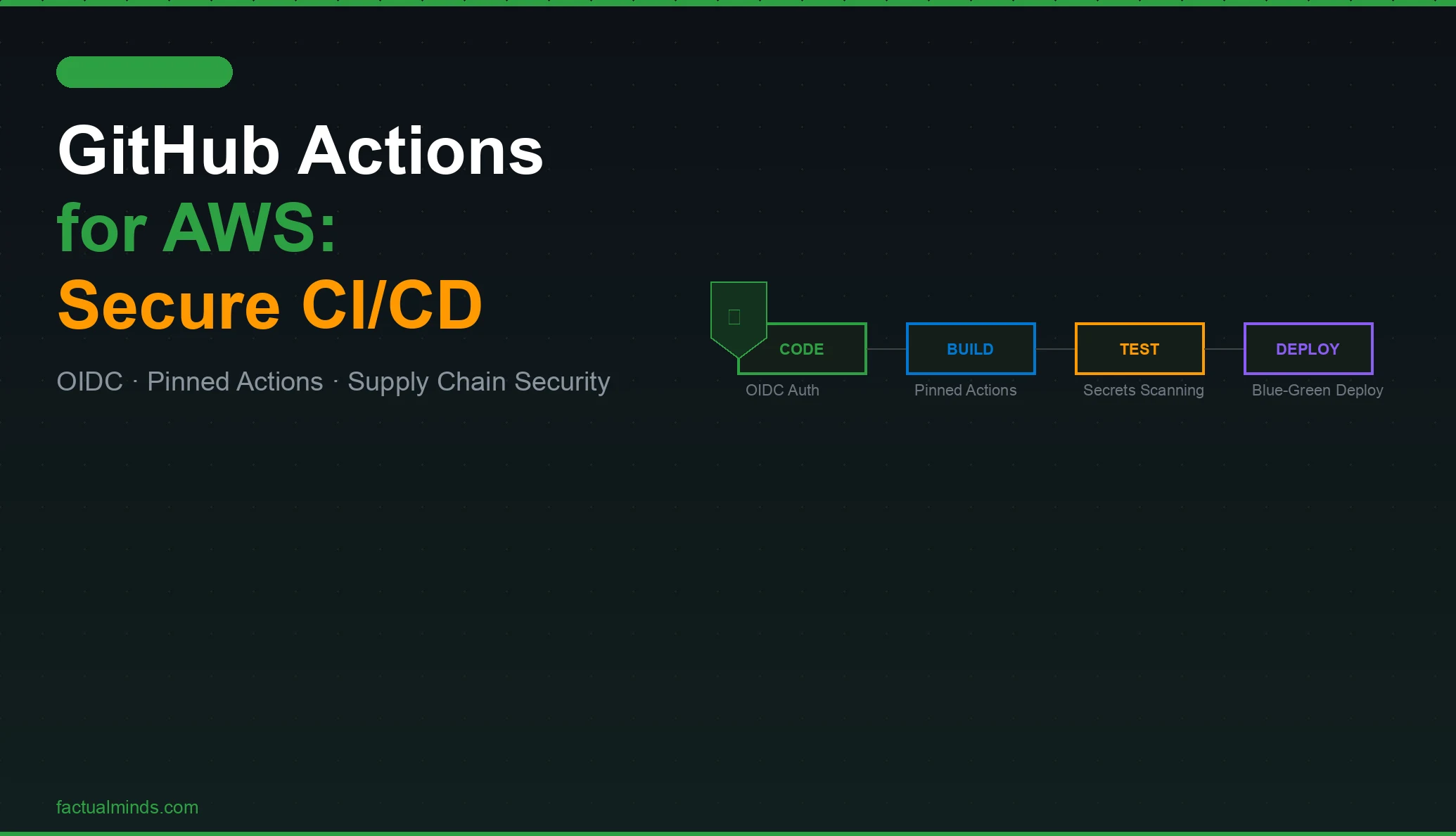
Production-grade GitHub Actions patterns for AWS workloads — OIDC authentication, pinned actions, blue-green deployments, build caching, and the security mistakes that leave your pipeline open to supply chain attacks.

A practical guide to AWS CodePipeline — pipeline architecture, CodeBuild configuration, deployment strategies, cross-account pipelines, and the CI/CD patterns that ship code safely to production.

A practical comparison of AWS Secrets Manager and SSM Parameter Store — pricing, rotation, encryption, cross-account access, and clear guidelines for when to use each service for secrets and configuration management.

A practical guide to CloudFormation for production — stack organization, cross-stack references, drift detection, change sets, rollback strategies, and the practices that make infrastructure deployments safe and repeatable.

A practical guide to choosing between monolithic and microservices architectures on AWS — team size, deployment complexity, operational cost, and the patterns that help you choose the right approach for your stage.