Message Ordering, Backpressure, and RabbitMQ DLQs on AWS
FIFO guarantees shrink throughput—and unbounded queues only move backpressure to your AWS bill. Ordering, flow control, and Amazon MQ dead-letter patterns vs Kinesis resharding.
The most expensive AWS bills do not come from large-scale systems under heavy load. They come from small systems with invisible failure modes: infinite retry loops, misconfigured queues, forgotten resources, and traffic patterns nobody anticipated.
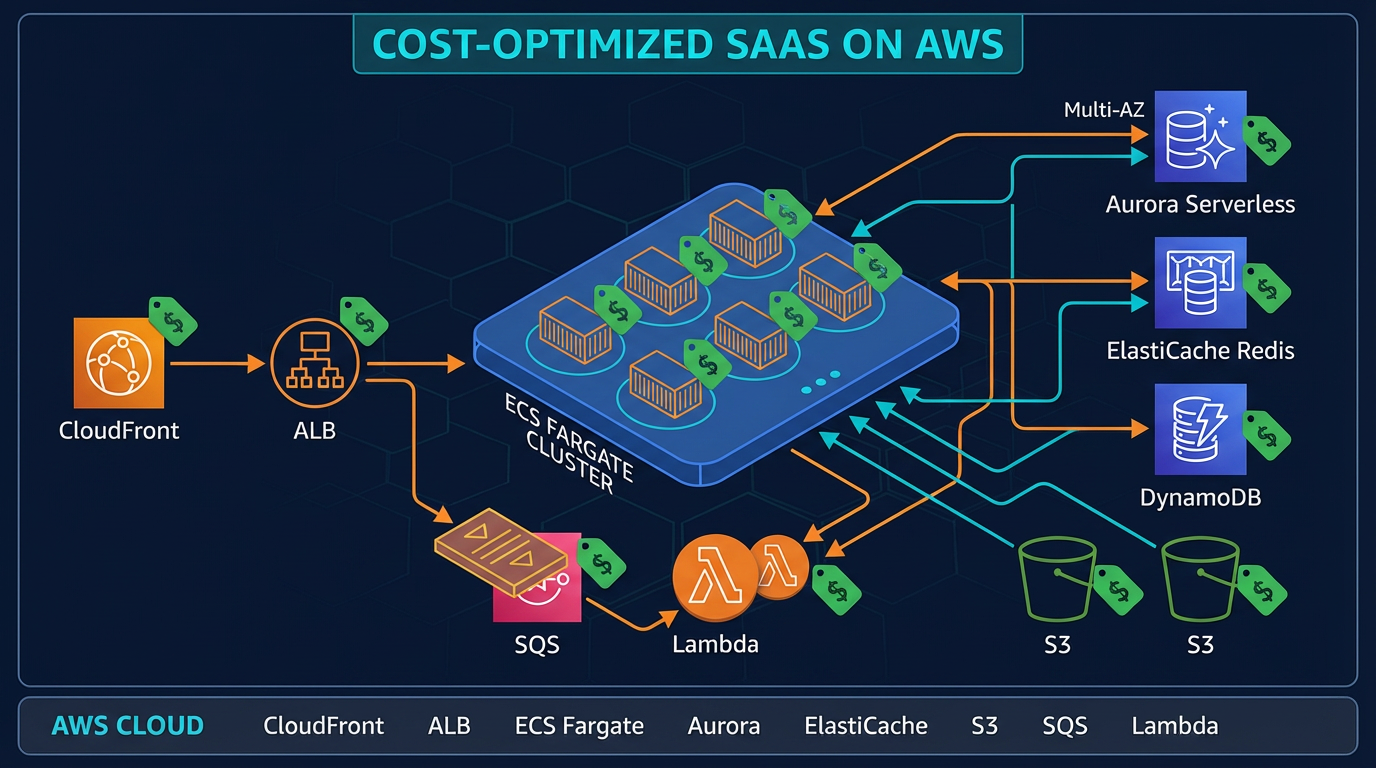
A B2B SaaS stack that costs $500/month at launch does not need to cost $50,000/month at 100,000 users if the architecture decisions at each stage are deliberate. This is the end-to-end reference architecture with real cost numbers.
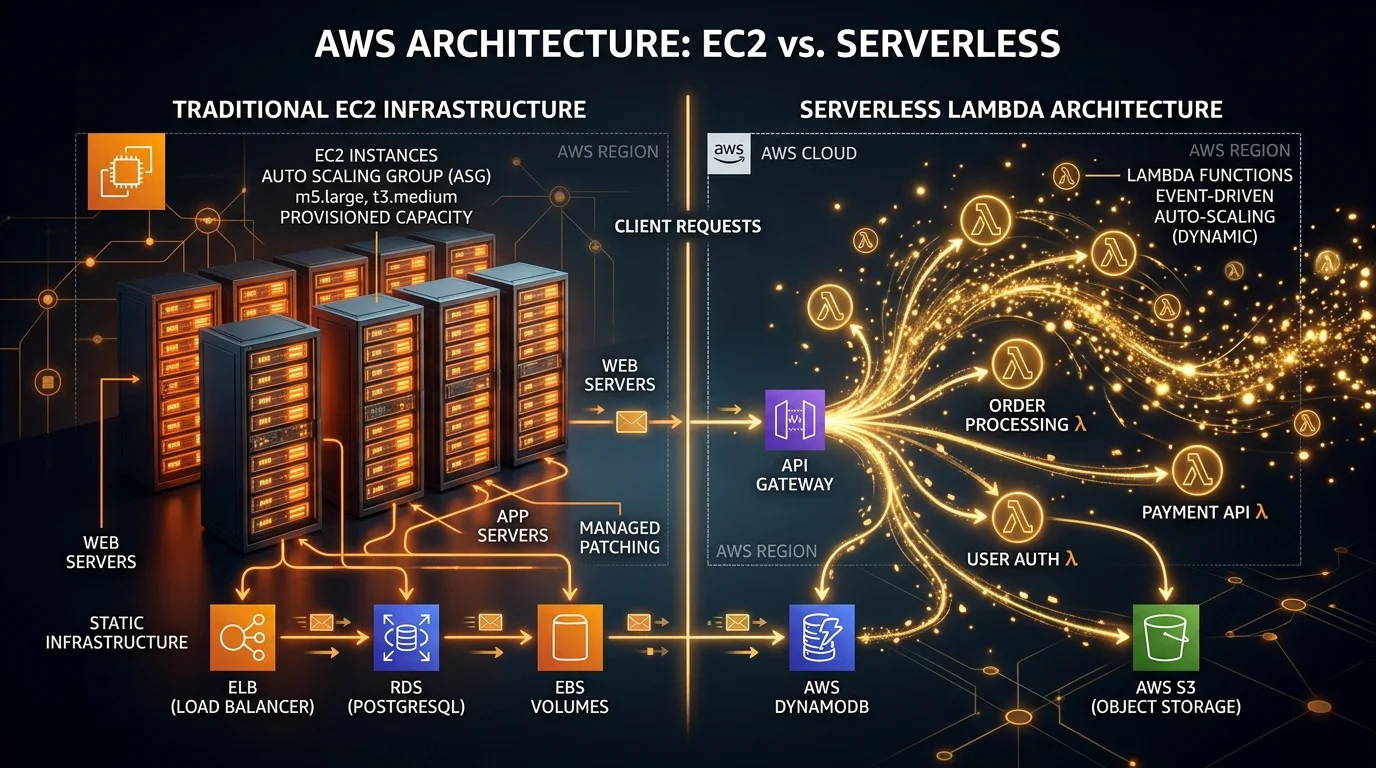
A technical guide to hybrid compute architectures that combine EC2, Lambda, Fargate, and Step Functions — with worked cost calculations, SQS buffering patterns, and decision frameworks based on invocation pattern rather than unit cost.
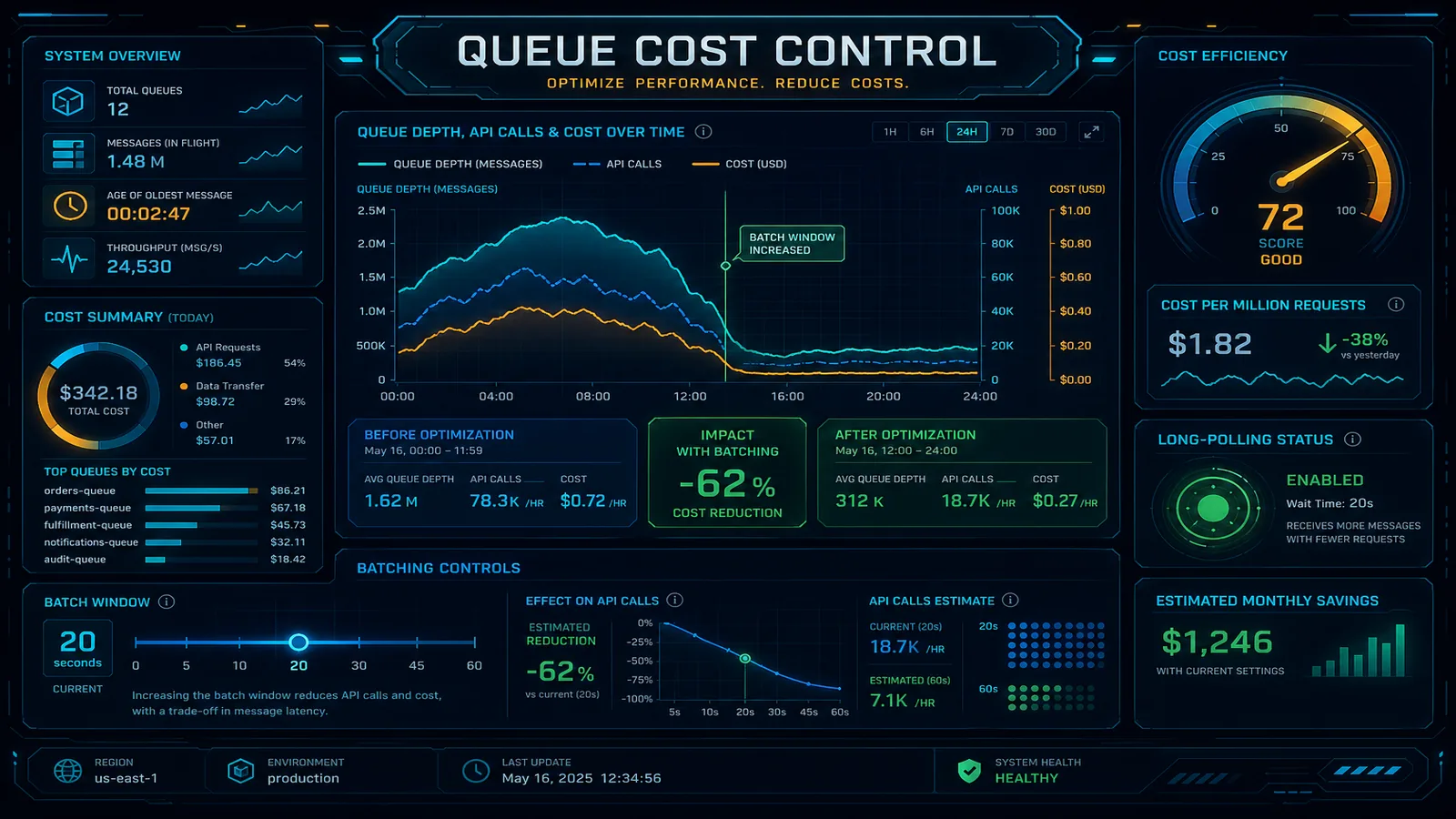
SQS charges per API request. Retry storms, misconfigured visibility timeouts, and unlimited worker concurrency turn queue costs from predictable to catastrophic. Here is how to prevent it.
SQS, MSK Kafka, and Redis queues are not interchangeable. Each has different cost models, ordering guarantees, and failure modes. This guide covers when to use each, how to autoscale workers on queue depth, and how to build idempotent consumers.
SQS is "reliable" only if you understand visibility timeout, dead-letter queues, and the silent failure mode where messages get processed twice. Standard vs FIFO, DLQ tuning, Lambda integration, and the patterns that turn SQS from "queue with default settings" into reliable backbone messaging.